

In Malaysia, the use of plants as clothing is a significant part of the country’s ethnobotanical heritage, especially among indigenous communities and in traditional textile crafts. This practice reflects a deep understanding of the natural environment and sustainable living. Plants have been used in Malaysia for weaving, producing natural dyes, creating woven garments or accessories and serving in ceremonial or symbolic dress. This practice is rooted in the daily life rituals of various ethnic groups, particularly the Orang Asli of Peninsular Malaysia and indigenous communities in Sabah and Sarawak. Each community-from the Malay Peninsula to Sarawak and Sabah-has its distinctive plant‑based textile traditions, many of which survive today in ritual or artisanal contexts.
Bark-cloth garments & ceremonial dress
- The Temuan Orang Asli use the bark of the terap tree to make thin traditional garments worn only during special ceremonies such as weddings, the appointment of a Batin (village chief), ancestral day celebrations, and visits by dignitaries. Men wear vests from bark cloth, while women use them as sarongs or blouses. Additional accessories such as rotan bangles, bead necklaces, and head ornaments are also crafted from natural plant materials, including terap bark [1].
Leaf weaving: pandanus/mengkuang and other fibres
- Pandanus (“pandan” and “mengkuang”) leaves are woven into mats, bags, pouches, hats, baskets, and ornamental accessories using complex patterns (kenarai, anyam gila). These woven items serve both practical and ceremonial purposes, and some are worn as clothing accessories or symbolic items [2].
- The Mah Meri people (Carey Island, Selangor), known for exquisite crafts, produce woven pieces such as hats, baskets, wall-hangings, mats, pouches and even costume jewelry. These are woven from pandanus and mengkuang leaves, bamboo, and tree bark, often bearing motifs with ritual or welcoming functions [3].
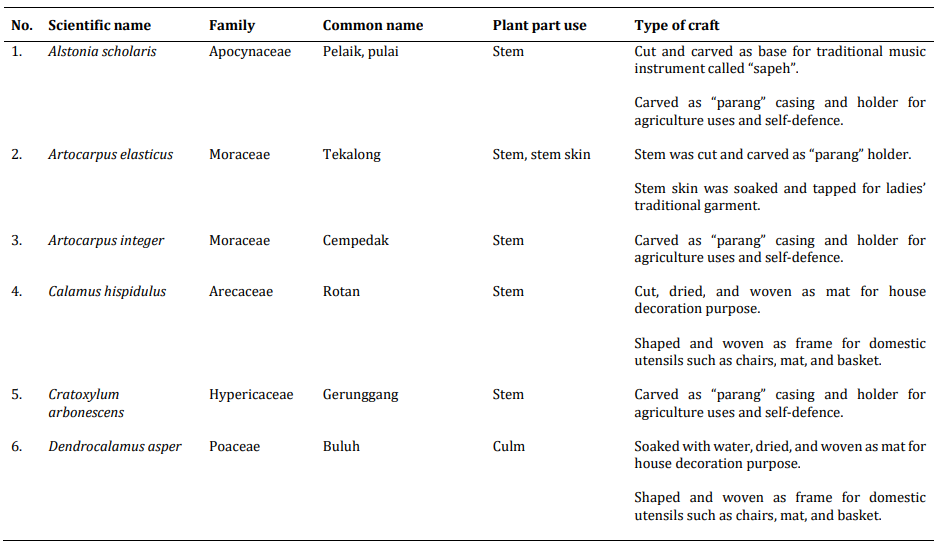
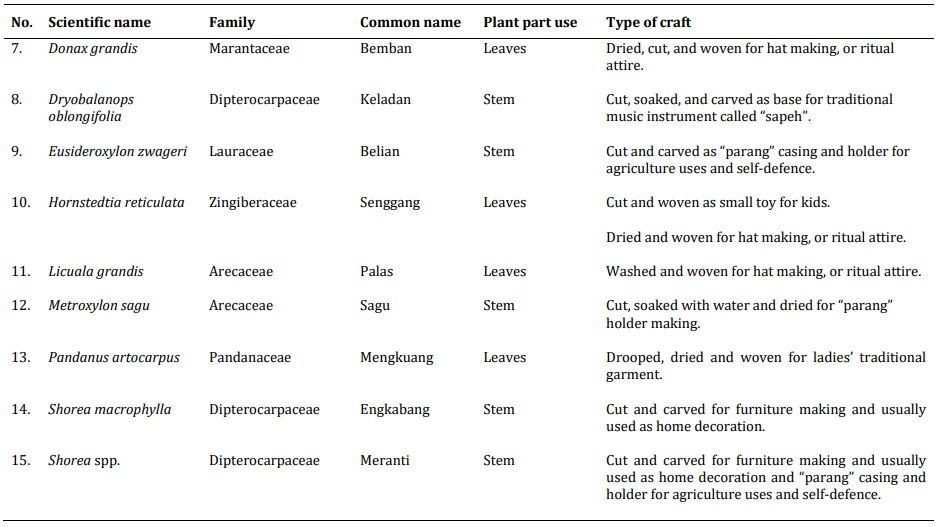
- The Iban ethnic community of Malaysia is known for its culture and handicrafts, including ceramics, mat weaving, basket weaving, “pua kumbu”, and carving. The Iban ethnic group traditionally creates handicrafts from local plants. Previous research indicates that handicrafts are primarily made from natural materials such as rattan (Calamus), bamboo (Bambusa vulgaris), bemban (Donax canniformis), palm leaves, and cotton yarn [4].
Table 1: Indigenous plants used as craft by the Ibans in Bintulu, Sarawak [4].
Dye-ing, ceremonial textiles and body adornment
- In Sarawak, Orang Ulu communities (tribes including Kenyah, Kayan, Kelabit, Penan, Punan) rely on rainforest plants for making body paints, dyes, and ceremonial clothing. They harvest bark, roots, leaves, and fruits to produce coloured pigments for face or body application—with specific colours carrying cultural meanings—and occasionally tattoo ink [5].
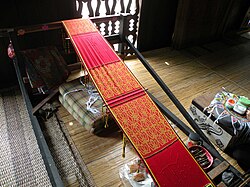
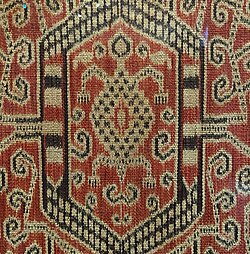
- The creation of Pua Kumbu by Iban weavers is based on yarn dyed with Marsdenia tinctoria (indigo/blue dyes), Fibraurea tinctoria (yellow), and Morinda citrifolia (brown, with quicklime added). These dyed threads are woven into ritual textiles that feature mythic and ancestral motifs used in ceremonial dress, longhouses, and spiritual presentations [6].
References:
- RoszieAmir. Orang Asli Temuan – Site Visit [Internet]. Kuala Lumpur: Roszie Amir; 2023 [cited 2025 Jul 27].
- Jmm VAP by MV. Malayan Crafts and Craftsmen Mural – Fibres [Internet]. Museum Volunteers, JMM. 2024.
- Zamzuri NH, Othman AK, Sharif TI, Hanafiah MH, Nordin NA. A Documentation of Mah Meri Indigenous Ceremonial Attire and Ancestral Day Event Stages. Advances in Applied Sociology. 2024 Mar 8;14(3):113-33
- [Yusli NA, Saupi N. Utilization of Indigenous Species as Crafts Among Iban People in Bintulu, Sarawak. Ine-Proceeding 2nd International Scientific Conference on Indigenous Crops 2022 (p. 41).]
- Rosli N, Ismail Z, Lepun P. Plants used as natural dye by the Orang Ulu ethnics in Asap Koyan Belaga Sarawak, Malaysia. Int J Curr Res. 2015;7(8):19770-5.
- Trismaya N, Nugroho AC, Purwanto S. Weaving for Development: An Ethnographic Study on How the Ibans of West Kalimantan Determines the Color of Pua Kumbu