

Insects use as sources of food
- Entomophagy is the practice of consuming insects as food
- In Malaysia, there are more than 70 ethnics practicing entomophagy especially during the olden days [1]
- In Sabah, Sarawak, and Kalimantan, some old rural people have consumed insects in one way or another due to their high nutritional content and even as a delicacy.
- There are about 60 species of insects known to be consumed as food by several ethnic groups in Sabah, Malaysia.
- In Borneo, there are over 80 documented bug species that are consumed.
- The Kadazandusun, Murut, and Rungus people are the primary collectors of these species, of which over 60 have been recorded in different communities around Sabah [2].
- Grasshoppers, sago grubs (butod, wutod or tobindok, sungut), and honey bee broods are the most often consumed insect groups [2].
- Other commonly consumed species include termites, ants, beetles, cicadas, crickets, and rice bugs [2].
- Cicadas: abundant when their host plant, Pongamia spp. started to produce young shoots [3] [4].
- Grasshopper: abundant during the planting season of crops such as padi and are considered as pests [5]
- High quantities of vitamins (particularly B-complex, e.g., B12), minerals (iron, zinc, calcium), vitamins D, E, and A, fibre, essential amino acids, omega-3 and omega-6 fatty acids, and antioxidants may make edible insects more beneficial to health. Some species of insects contain high iron and zinc, though bioavailability differs. For example, the house cricket has an average protein content of approximately 65% of dry matter, which is superior to other animal and plant sources such as beef, eggs, milk, and soybeans where protein makes up approximately 50%, 52%, 30%, and 45% of dry matter, respectively. Edible insects have anti-inflammatory and antioxidant qualities, help with gastrointestinal health, and may even be used as an exercise supplement [6].
- Some insects also contain antioxidants, which may help prevent diseases, though there is not enough human research to support this. Mealworms and silkworms are two examples of insects that have Angiotensin-Converting Enzyme (ACE) inhibitory function; nonetheless, human research is required. Additionally, insect powders have demonstrated weight management effects in mice as well as potential reductions in Endoplasmic Reticulum (ER) stress and fat storage. Insects’ chitin may help them resist infections by boosting immune responses. It is broken down by human chitinases, which may be useful for diagnosis [7].
- Many insects have higher protein contents per 100 g than conventional meats (for example, Acheta domesticus has about 60.3% protein per 100 g). Studies on animals have shown that eating insects can reduce cholesterol and control hunger. Eating insects may help control weight and lower the risk of metabolic disorders including diabetes and obesity. For example, phytosterols and ACE-inhibitory proteins found in Locusta migratoria may help reduce blood pressure [8].
- Moreover, insects like crickets (Gryllodes sigillatus) can be used to create protein supplements comparable in quality to whey and casein [9].
Table 1: List of insects known to be consumed as food in Malaysia by several ethnics
| Insect | Preparation | Region | Figure |
| Grasshopper (Oxya japonica) | Roasted over open fire | Peninsular Malaysia, Sabah, Sarawak | 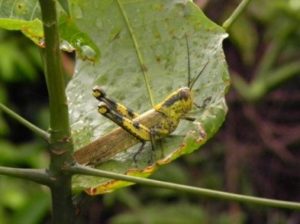 |
| Short horned grasshopper (Valanga nigricornis) | Deep fried | Sabah | 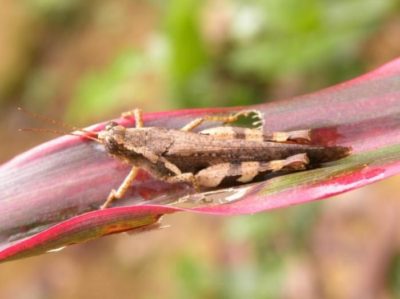 |
| Pointed-nose grasshoppers (Atractomorpha psittacina) | Boiled/Stir-fried/deep-fried | Sabah | 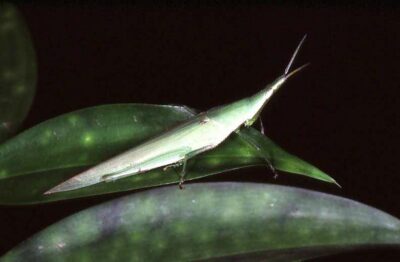 |
| Mole crickets / Gryllotalpa orientalis | Stir fried without oil | Sabah | 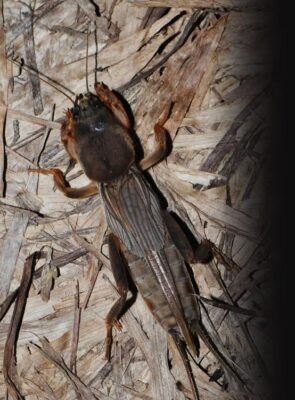 |
| Bush crickets (Hexacentrus unicolor/Onomarchus sp./ Mecopoda elongata) | Lightly salted, boiled, and stir-fried/roasted | Sabah | 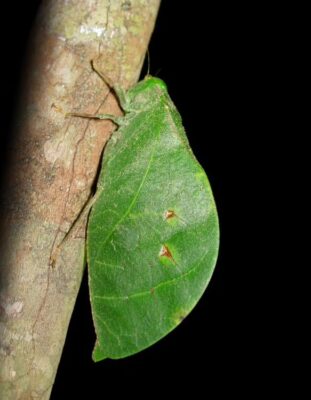 |
| Cicadas (Orientopsaltria spp./Platylomia spp./Megapomponia merula) | Grilled/stir-fried with a pinch of salt, without oil | Sabah | 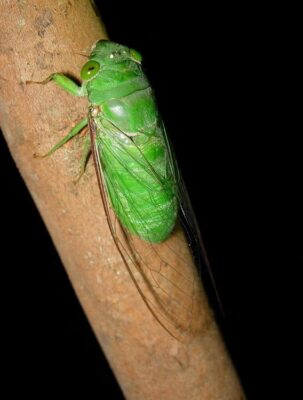 |
| Field crickets (Nisitrus vittatus) | Boiled/stir-fried without oil/deep-fried | Sabah | 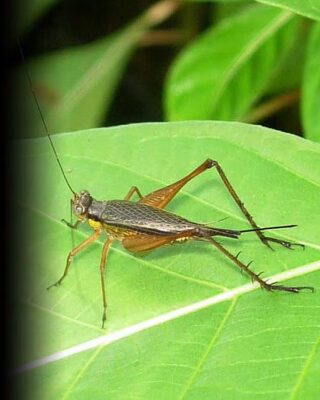 |
| Moth bugs | Stir-fried without oil | Sabah | 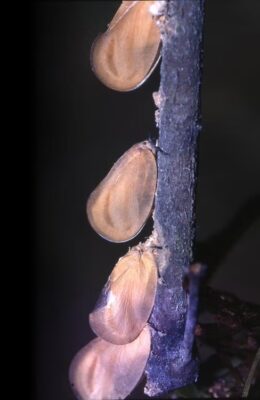 |
| Hawk moths (Hippotion celerio) | Wings removed, boiled until dry | Sabah | 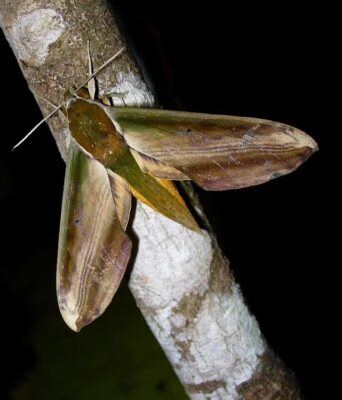 |
| Macromoth (Lyssa zampa) | Wing removed and boiled to dry | Sabah | 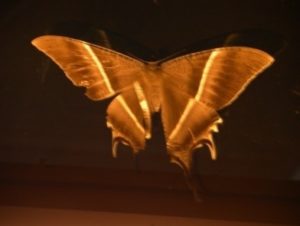 |
| Sago grub / larvae of the weevil, (Rhychophorus ferrugineus) | Raw, stir-fried without oil | Peninsular Malaysia, Sabah, Sarawak | 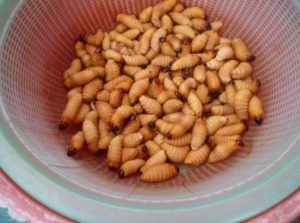 |
| Rice ear bug (Leptocorisa oratorius) | Mashed with chili and salt, cooked in a hollow bamboo stem/stir-fried/boiled/mashed with boiled tapioca leaves & shoots | Sabah | 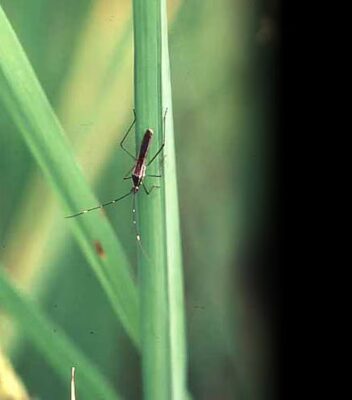 |
| Flying termites (Macrotermes gilvus/Macrotermes dubius) | Eaten raw/stir-frying without oil/cooking in porridge or rice | Sabah | 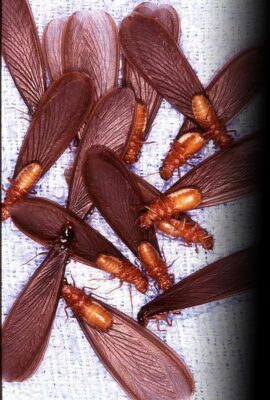 |
| Praying mantises (Mantis religiosa) | Roasted over an open fire | Sabah | 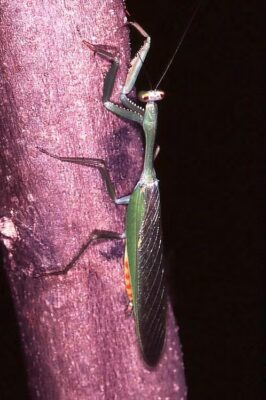 |
| Sticks insects (Haaniella echinata) | Female insect is cut open and egg is removed, boiled in water and shell of the eggs are removed and eaten | Sabah, Sarawak | 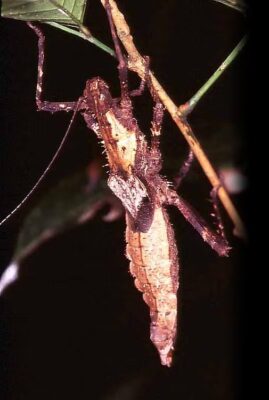 |
| Green stink bug (Nezara viridula) | Mash the bugs with chili and salt, cooked in hollow bamboo stem/eaten raw/snack | Sabah | 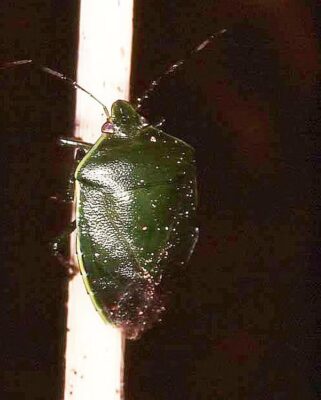 |
| Snout beetles (Rhynchophorus ferrugineus) & other curculionidae | Adult grilled or roasted | Sabah | 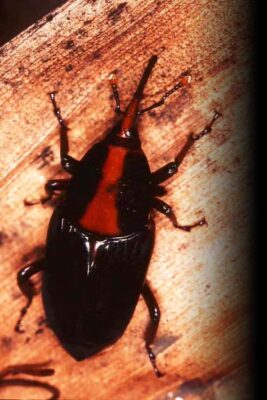 |
| Horned beetles (Chalcosoma,Oryctes & Xylotrupes) | Adult beetles grilled or roasted | Sabah | 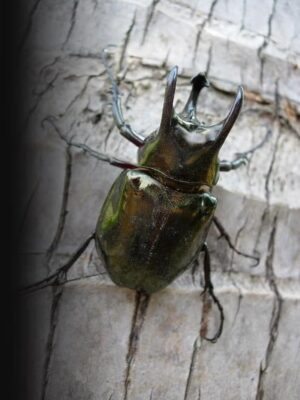 |
| Stag beetles (Dorcus spp./Odontolabis spp.) | Adult beetles grilled or roasted | Sabah | 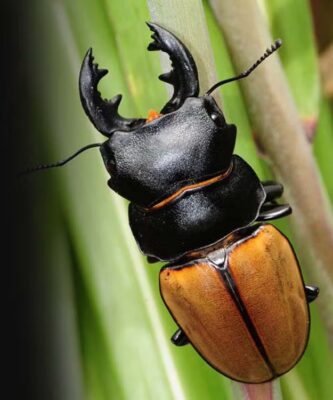 |
| Long-horned beetles (Macrotoma sp./Rhaphipodus suturalis/Batocera spp.) | Adult beetles grilled or roasted | Sabah | 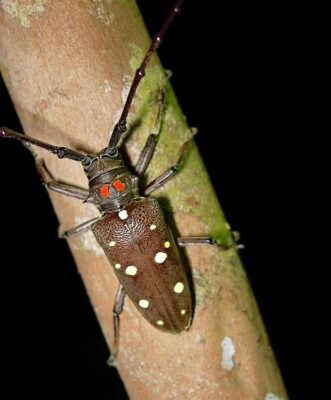 |
| Leaf beetles (Aplosonyx albicornis) | Boiled or simmered until dry/stir-fried without oil | Sabah | 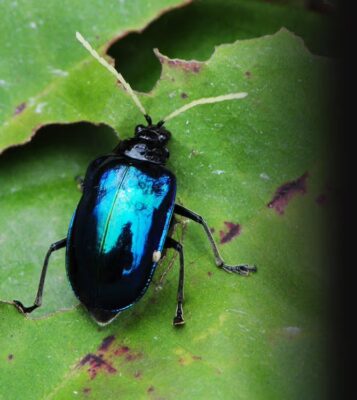 |
| Cochchafers (Leucopholis staudingeri) | Adult beetles grilled or roasted | Sabah | 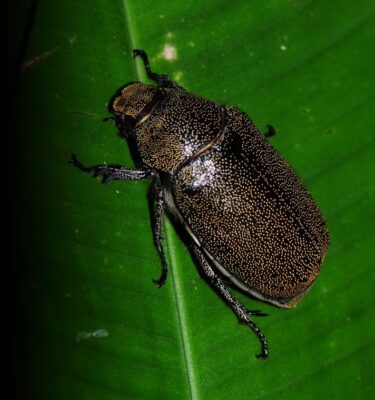 |
| Giant honey bee (Apis dorsata) | Honeybee larve are eaten raw/boiled until dry | Peninsular Malaysia, Sabah, Sarawak | 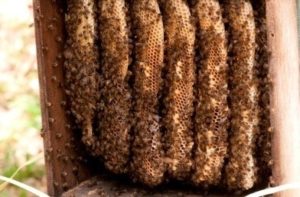 |
| Asian honey bee (Apis cerana) | Honeybee larvae are eaten raw/boiled until dry/adult bees are boiled to break down the poison until the stringer softens. Pounding the bees before boilng is also effective | Peninsular Malaysia, Sabah, Sarawak | 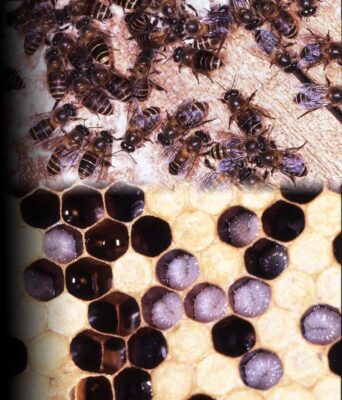 |
| Weaver ants (Oecophylla smaragdina) | Adult ants grounded, mixed with chili, and salt/stir-fried with onions or shallots. Eggs, larvae, and puppae eaten raw or cooked in a porridge | Sabah, Sarawak | 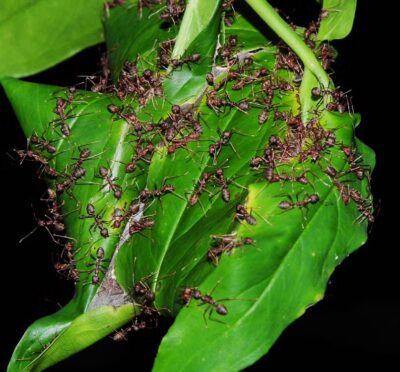 |
| Giant forest ants (Camponotus gigas) | Use as flavouring | Peninsular Malaysia | 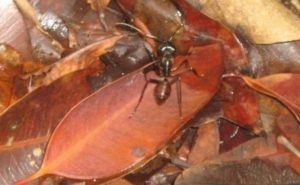 |
| Dragonflies (Orthetrum spp.) | Wings removed, salted lightly, and boiled | Sabah | 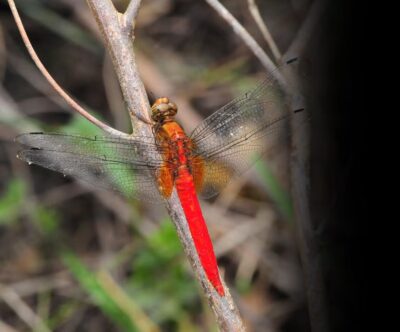 |
References:
- Salleh H. The encyclopedia of Malaysia. Peoples and traditions. Archipelago Press; 2007. p. 8.
- Awang-Kanak, Fadzilah. (2022). Ethnobotany and Traditional Knowledge Studies in Sabah (1980-2020).
- Durst PB, Johnson DV, Leslie RN, Shono K, editor. Edible forest insects. Forest insects as food: Humans bite back. Proceedings of a workshop on Asia-Pacific resources and their potential for development; 2008 19-21 Feb; Chiang Mai, Thailand: 2010.
- Chung AYC, editor. Diversity and sustainable use of insects as source of food in interior Sabah. Proceedings of the 14th Malaysian Forestry Conference, Kota Kinabalu, Sabah. Forestry in Malaysia: Reinventing human-nature relationships. Sabah Forestry Department: 2007, p. 752-756.
- Yusoff I, Khoo KC. Serangga perosak utama: Tanaman di Malaysia. Kuala Lumpur: Dewan Bahasa dan Pustaka, Kementerian Pendidikan Malaysia, 1989.
- Sabri NS, Kamardan MI, Wong SX, Azman NF, Akhir FN, Othman NA, Awang N, Kuroki Y, Hara H. Future aspects of insects’ ingestion in Malaysia and Indonesia for human well-being and religion regulation. Future Foods. 2023 Dec 1; 8:100267.
- Nowakowski, A. C., Miller, A. C., Miller, M. E., Xiao, H., & Wu, X. (2021). Potential health benefits of edible insects. Critical Reviews in Food Science and Nutrition, 62(13), 3499–3508.
- Roos, N., & van Huis, A. (2017). Consuming insects: are there health benefits? Journal of Insects as Food and Feed, 3(4), 225-230.
- Jankowski, W. M., Przychodniak, D., Gromek, W., Majsiak, E., & Kurowski, M. (2025). Edible Insects as an Alternative Source of Nutrients: Benefits, Risks, and the Future of Entomophagy in Europe-A Narrative Review. Foods (Basel, Switzerland), 14(2), 270.
- Pinheiro, N. A., Silva, L. J. G., Pena, A., & Pereira, A. M. P. T. (2025). Entomophagy: Nutritional Value, Benefits, Regulation and Food Safety. Foods, 14(13), 2380.