

Traditional Indian medicinal knowledge comprised of Ayurveda, Unani and Siddha. Approximately, 45,000 plant species (nearly 20% of global flora) are found in the Indian subcontinent of which 3,500 have medicinal value, 500 used in the Ayurvedic industry, 80% obtained from wild areas, and 10% cultivated in farms. Approximately 7,500 plant species are in use across traditional systems like Ayuyveda, Siddha, Unani, Amchi, folk medicine, and even allopathic care [1]. A 2023-2024 report of the Ministry of AYUSH showed there are approximately 755,780 registered AYUSH practitioners in India, supported by 36,848 AYUSH dispensaries, 3,844 hospitals, 7,914 licensed pharmacies, and 789 colleges with 63,477 undergraduate seats [2].
Traditional texts and ethnobotanical sources indicate that nearly 10,000 plants have been used across the Indian subcontinent. However, only around 1,200 to 1,500 are included in the Ayurvedic pharmacopeia with plants accounting for approximately 90% of all ayurvedic medications. Ayurvedic herbs are believed to exert a stronger physiological effect than foods or spices. Such responses allow the reversal of pathological processes and regulate the doshas. As a result, one should exercise caution when working with medicinal plants. Classical Ayurveda remedies derived from medicinal plants are called “yoga” in Sanskrit. Yogas evolved from years of actual practice of combining herbs to achieve the best results.
Commonly propagated Ayurvedic herbs in the India market.
| Herbs/Plants | Ayurvedic perspective |
| Curcuma/turmeric | Anti-inflammatory and anticarcinogenic actions Pungent and bitter in taste (katu, tikta), dry in quality (guna), hot in potency (veerya), and pungent in its postdigestive taste (vipaka). It is used in vitiated states of kapha and pita |
| Ginger | Pungent taste, be light and unctuous in quality, hot in potency and sweet postdigestion; help reduce patients’ kapha and vata and increase their pitta. |
| Aloe vera | Bitter and a sweet taste, a heavy, unctuous and slimy quality, a cold potency, and a pungent postdigestive taste. It is good in vitiated conditions of pitta and vata. Used in various inflammatory diseases, as well as in skin and liver disease. |
| Tulsi (Ocimum sanctum) | Taste both pungent and bitter Light and dry in quality, hot in potency, and pungent in its postdigestive taste. Increases pitta and decreases both kapha and vata. Administered against worms and parasites, insect poisoning, and in cases of toxicity. |
| Moringa (Moringa oleifera) | Moringa is mostly grown in the south of India, where its fruits and leaves are used as a vegetable. Ayurveda uses the plants’ roots and bark for medicinal purposes. It is sweet and bitter in taste, sharp and light in quality, hot in potency, and pungent in postdigestion. It is seen to pacify kapha. |
| Guduchi/Amrut (Tinospora cordifolia) | It has a bitter taste, is heavy in quality, hot in potency, and sweet in postdigestion. It pacifies all 3 of the body’s doshas |
| Pippali (Piper longum) | Bioavailability enhancer It is seen to be sweet and pungent in taste, unctuous in quality, hot in potency, and sweet in postdigestive action. It pacifies vata and kapha, increases pitta, and is slightly laxative. An immune modulatory plant |
| Aswagandha (Withania somnifera) | Bitter and astringent in taste, light and unctuous in quality, hot in potency, and sweet in postdigestive action. It pacifies vata and kapha, and increases pitta. Its actions on the central nervous system mean that it is mostly used in patients with mental health conditions. |
| Triphala: Terminalia chebula (Haritaki), Terminalia bellirica (Bibhitaki), Emblica officinalis (Amalaki | A combination from 3 fruit plants. It drives out body toxins by unblocking the body’s channels (srothas). |
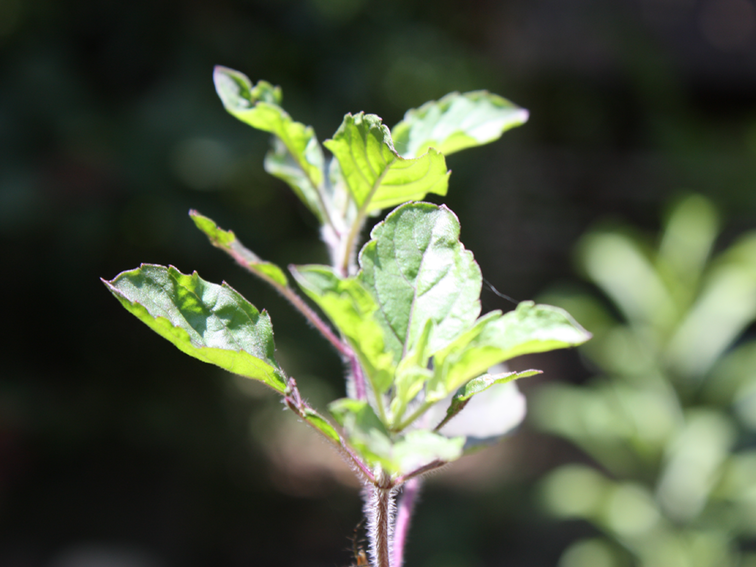
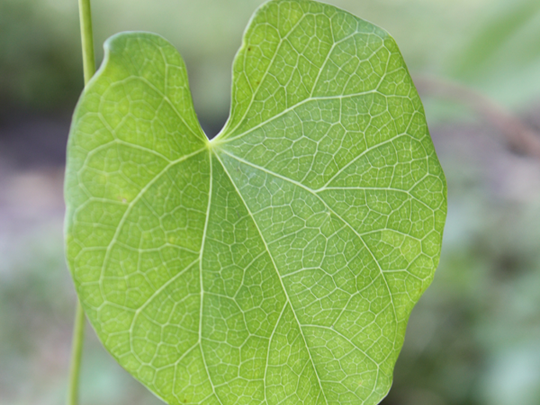
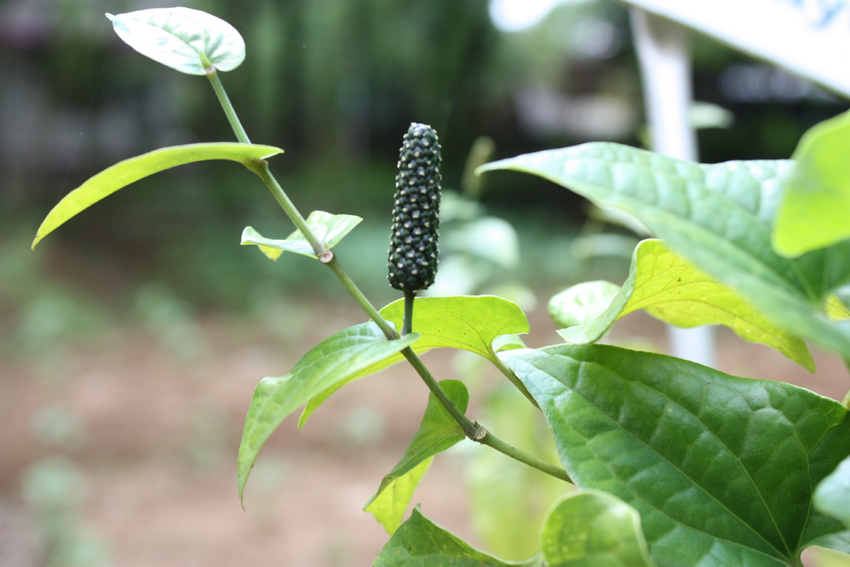
Figure 1: (a) Tulsi (Ocimun sanctum); (b) Guduchi or amrut (Tinospora cordifolia) and (c) Pippali (Piper longum) [3].
Traditional Indian Medicine (TIM) was introduced to Malaysia by Indian immigrants and has been practiced within Malaysian Indian Communities for centuries [4]. Ayurveda emphasizes balancing the three doshas (Vata, Pitta, Kapha) using herbal formulations, dietary modifications, and lifestyle adjustments. Siddha is a system from South India, emphasizing eight branches of medicine and using a combination of herbal, mineral, and metallic preparations; accompanied by practices like yoga [5]. The National Traditional and Complementary Medicine Blueprint (2018-2027) sets comprehensive goals for the development of T&CM services and products across Malaysia [6].
The Pertubuhan Perubatan Tradisional India Malaysia (PEPTIM) also known as MATIM established in 2004, represents practitioners of TIM, including Ayurveda, Siddha, Yoga, and Indian naturopathy. It advocates for standardization, practitioner registration, and quality adherence. Approximately 15 public hospitals now offer TIM services as part of integrated Traditional & Complementary Medicine (T&CM) units. Examples include Shirodhara for insomnia, stress, anxiety, depression, alongside herbal therapies, Malay massage, acupuncture, and post-stroke care [7]. Examples of plants used in TIM include Momordica charantia (bitter melon), valued for its anti-diabetic properties; widely recognized across South and Southeast Asia. Ocimun sanctum (Tulsi/holy basil) known for its adaptogenic, antioxidant, hypoglycemic, immunomodulatory, and radioprotective qualities and Piper longum (long pepper) and Piper nigrum (black pepper) prescribed for treating cough, asthma, and fever [8].
Although the National Pharmaceutical Regulatory Agency (NPRA) oversees T&CM products, requiring quality, safety, and limited efficacy evidence. However, manufacturers often register products as harmless ” health supplements” to avoid stringent efficacy testing. The main regulatory focus remains on safety and quality since relatively few traditional medicines have sufficient evidence to qualify for the stricter ” Natural Products with Therapeutic Claim” pathway [9].
References:
- Si-Yuan P, Litscher G, Si-Hua G, Shu-Feng Z, Zhi-Ling Y, Hou-Qi C, et al. Historical Perspective of Traditional Indigenous Medical Practices: The Current Renaissance and Conservation of Herbal Resources. Evidence – Based Complementary and Alternative Medicine 2014;2014.
- National Institute of Ayurveda. Shaping holistic health care: National Institution of Ayurveda perspective. Indian J Ayurveda Res. 2023;4(3):165-8.
- Kumar, S., Dobos, G. J., & Rampp, T. (2017). The Significance of Ayurvedic Medicinal Plants. Journal of evidence-based complementary & alternative medicine, 22(3), 494–501.
- Official Website of High Commission of India, Kuala Lumpur. Ayurveda in Malaysia. [Accessed 2025 Aug 21].
- Siddham. Siddha System rises in Malaysia to enhance health & quality of life. [Accessed 2025 Aug 21].
- Malaysian Investment Development Authority (MIDA). Malaysia – A promising future for traditional and herbal medicine. [Accessed 2025 Aug 21].
- Varnam Malaysia. PEPTIM & UM Encourages Traditional Medical Practitioners to Complete Registration. Varnam Malaysia. 2024 Feb 9 [Accessed 2025 Aug 21].
- National Center for Biotechnology Information. Indian systems of medicine – listing Momordica charantia, Ocimum sanctum, Piper spp. PMC. [Accessed 21 Aug 2025].
- Park, JE., Yi, J. & Kwon, O. Twenty years of traditional and complementary medicine regulation and its impact in Malaysia: achievements and policy lessons. BMC Health Serv Res 22, 102 (2022).